
How To Choose The Right Gadget For Your Needs
Introduction
Choosing a new gadget can be challenging because the technology market offers thousands of options in different categories. Smartphones, laptops, tablets, smartwatches, cameras, headphones, and smart home devices come with different specifications, functions, and price ranges. A device that works well for one person may not be the best choice for another.
The right gadget should match your daily activities, work requirements, entertainment preferences, and budget. Understanding your needs before purchasing a device helps you avoid unnecessary expenses and ensures you receive the features that matter most.
This guide explains how to choose the right gadget for your needs, including important factors such as purpose, performance, compatibility, battery life, security, and long-term value.
Understand Your Purpose Before Buying
The first step in selecting any gadget is identifying why you need it. Different gadgets are designed for different purposes, and understanding your goals helps narrow your choices.
For example:
- Students may need devices for online learning, research, note-taking, and assignments.
- Professionals may require gadgets for communication, productivity, and specialized work applications.
- Gamers may prioritize processing power, graphics performance, and display quality.
- Content creators may focus on cameras, storage, and editing capabilities.
- Everyday users may prefer simple devices for communication, browsing, and entertainment.
Buying a device based on your actual requirements prevents paying for features you may never use.
Set a Realistic Budget
Technology products are available at different price levels. Expensive gadgets often include additional features, but a higher price does not always mean a better choice for every user.
Before shopping:
- Decide how much you are willing to spend.
- Compare devices within your budget.
- Avoid paying for unnecessary features.
- Consider future maintenance or accessory costs.
A clear budget helps you focus on devices that offer the best balance between cost and functionality.
Compare Device Specifications
Specifications determine how a gadget performs. Understanding the main technical components helps you make a better decision.
Important specifications include:
Processor
The processor controls the speed and performance of a device. A stronger processor provides smoother multitasking and better handling of demanding applications.
Memory (RAM)
RAM affects how many applications a device can run at the same time. More memory generally provides better multitasking capabilities.
Storage Capacity
Storage determines how many files, applications, videos, and photos can be saved on the device.
Users who store large amounts of media or install many applications should choose higher storage options.
Display
Screen size and resolution affect the viewing experience. The ideal display depends on whether the device will be used for reading, gaming, watching videos, or professional work.
Check Battery Performance
Battery life is one of the most important factors when choosing portable gadgets.
Consider:
- How many hours the device can operate on a single charge.
- Charging speed.
- Battery efficiency during heavy usage.
- Availability of power-saving features.
A device with reliable battery performance provides greater flexibility for travel, work, and outdoor activities.
Consider Operating Systems and Software
The operating system determines how you interact with a gadget and what applications are available.
Common examples include:
- Android for many smartphones and tablets.
- iOS for certain mobile devices.
- Windows for many computers.
- macOS for Apple computers.
When choosing a system, consider familiarity, available applications, and compatibility with other devices you already own.
Evaluate Compatibility With Other Devices
Many people own multiple gadgets. Choosing products that work well together creates a more convenient experience.
Compatibility factors include:
- File sharing capabilities.
- Wireless connections.
- Accessory support.
- Cloud synchronization.
- Application availability.
A connected ecosystem allows devices to communicate and share information more efficiently.
Review Build Quality and Design
The physical construction of a gadget affects durability and everyday use.
Consider:
- Material quality.
- Weight and size.
- Portability.
- Button placement.
- Screen protection.
- Water and dust resistance.
A comfortable and durable design improves the long-term user experience.
Examine Security Features
Digital security should always be considered when purchasing technology.
Useful security features include:
- Fingerprint scanners.
- Facial recognition.
- Password protection.
- Data encryption.
- Security updates.
Regular software support from manufacturers also helps protect devices from newly discovered security risks.
Look at Camera and Audio Features
For many users, camera and sound quality are important factors.
Camera considerations include:
- Photo quality.
- Video recording options.
- Image stabilization.
- Low-light performance.
Audio considerations include:
- Speaker quality.
- Microphone performance.
- Support for external audio devices.
These features are especially important for content creators, online meetings, and entertainment users.
Read Reviews and User Experiences
Before buying a gadget, research reviews from experts and existing users.
Reviews can provide information about:
- Actual performance.
- Reliability.
- Common issues.
- Battery behavior.
- Software experience.
Comparing multiple opinions helps create a more complete understanding of a product.
Think About Future Needs
Technology changes quickly, so it is useful to choose a device that will continue meeting your needs for several years.
Consider:
- Available software updates.
- Upgrade options.
- Storage requirements.
- New technology compatibility.
Planning ahead can increase the useful life of your gadget.
Consider Warranty and Customer Support
A warranty provides protection if the gadget develops technical problems.
Before purchasing, check:
- Warranty duration.
- Repair services.
- Availability of replacement parts.
- Customer support options.
Reliable after-sales support can save time and money.
Avoid Buying Based Only on Trends
Popular gadgets often receive attention through advertisements and social media. However, the most popular device may not be the best option for your situation.
Focus on:
- Your daily requirements.
- Necessary features.
- Long-term usability.
- Overall value.
A practical decision usually provides better satisfaction than choosing a product only because it is popular.
Online vs Physical Store Purchases
Gadgets can be purchased through online stores or physical shops. Both options have advantages.
Online Purchasing
Benefits include:
- Larger product selection.
- Easy price comparison.
- Customer reviews.
- Home delivery.
Physical Store Purchasing
Benefits include:
- Hands-on experience.
- Immediate purchase.
- Direct communication with sales representatives.
Choosing the right purchasing method depends on your preference and available options.
Common Mistakes to Avoid When Buying Gadgets
Many buyers make mistakes that lead to dissatisfaction.
Avoid these common errors:
- Ignoring your actual requirements.
- Buying the cheapest option without checking quality.
- Paying for features you will not use.
- Forgetting compatibility with existing devices.
- Ignoring software updates and security support.
- Not researching reviews before purchasing.
Avoiding these mistakes helps you make a better investment.
The Future of Gadget Selection
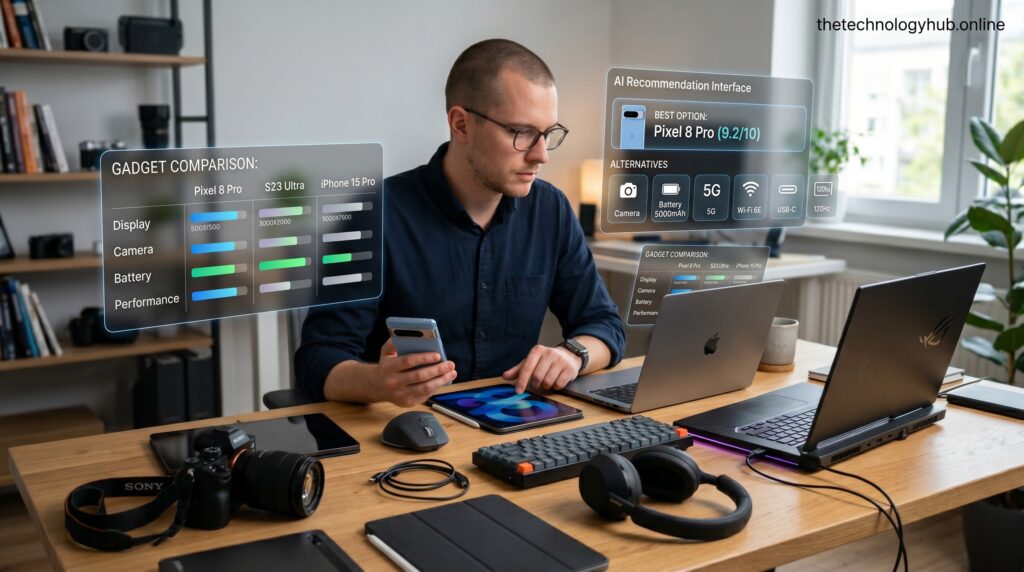
The process of choosing gadgets will continue changing as technology develops. Artificial intelligence, smart ecosystems, and connected devices are making product selection more personalized.
Future consumers may rely on AI recommendations, virtual product demonstrations, and advanced comparison tools to make purchasing decisions.
Understanding basic technology concepts will remain important for choosing devices that provide long-term value.
Conclusion
Choosing the right gadget requires careful consideration of your needs, budget, performance requirements, and future expectations. Instead of selecting a device based only on popularity or advertising, users should compare specifications, evaluate compatibility, check security features, and research real user experiences.
The ideal gadget is not always the most expensive or newest model. The best choice is a device that supports your daily activities, remains reliable over time, and provides good value for your investment.
Frequently Asked Questions (FAQs)
1. How do I know which gadget is right for me?
Identify your main purpose, compare features, set a budget, and choose a device that matches your daily requirements.
2. Is buying an expensive gadget always better?
No. A more expensive gadget may have additional features, but the best choice depends on your needs and how you plan to use the device.
3. What specifications should I check before buying a gadget?
Important specifications include the processor, RAM, storage capacity, battery performance, display quality, and security features.
4. How important is battery life when choosing a gadget?
Battery life is essential for portable devices because it affects convenience and how long the gadget can be used without charging.
5. Should I read reviews before purchasing a gadget?
Yes. Reviews from experts and users can provide useful information about performance, reliability, and possible issues.
6. What is the biggest mistake people make when buying gadgets?
Many people buy gadgets based on trends or advertisements instead of considering their personal needs and practical requirements.