Android vs iOS: Key Differences Explained
Introduction
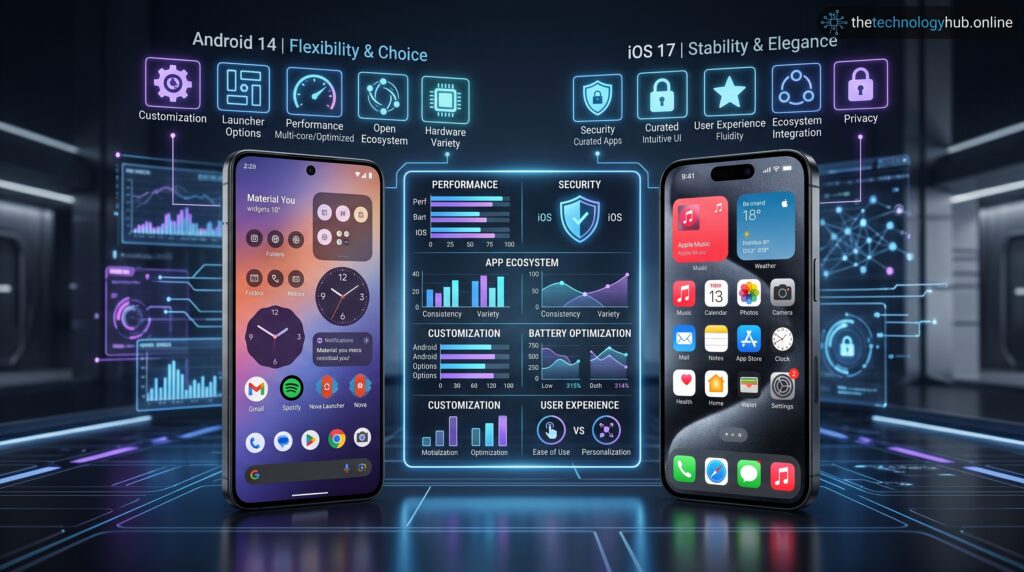
Smartphones have become an essential part of modern life, helping people communicate, work, learn, shop, and access digital services. The two most widely used mobile operating systems are Android and iOS. Both platforms offer a wide range of features, applications, security systems, and user experiences, but they follow different approaches in terms of design, customization, hardware support, and software management.
Choosing between Android and iOS depends on individual requirements, budget, personal preferences, and the devices users already own. Understanding the key differences between these operating systems can help buyers make informed decisions when purchasing a smartphone.
This article explores Android and iOS in detail, comparing their features, performance, security, applications, customization options, and overall user experience.
Understanding Android and iOS
Android is a mobile operating system developed by Google and used by many smartphone manufacturers. It is available on devices from various brands with different price ranges and hardware configurations.
iOS is the mobile operating system developed by Apple and is exclusively available on the iPhone. Apple controls both the hardware and software, creating a unified ecosystem for its devices.
Although both systems provide similar core functions such as calling, messaging, internet browsing, photography, and application support, they differ in many important areas.
User Interface and Experience
The user interface is one of the first differences people notice when using Android or iOS.
Android User Experience
Android provides a flexible interface that allows users to customize home screens, widgets, launchers, and system settings.
Users can:
- Change default applications.
- Install different launchers.
- Customize themes and icons.
- Arrange widgets in different ways.
- Adjust various system preferences.
This flexibility makes Android suitable for users who like greater control over their devices.
iOS User Experience
iOS follows a consistent design approach across all supported iPhone models. The interface focuses on simplicity and consistency.
Apple controls the design of the operating system, resulting in a similar experience across all iPhone devices.
Users who prefer a straightforward and uniform interface often choose iOS.
Device Availability and Pricing
One major difference between Android and iOS is the number of available devices.
Android Devices
Android smartphones are available from many manufacturers in different price categories.
Users can choose from:
- Budget phones
- Mid-range devices
- Premium smartphones
- Gaming phones
- Foldable phones
This wide selection allows consumers to find devices that match different budgets and requirements.
iPhone Devices
iOS is available only on Apple iPhones. Although Apple offers several models, the selection is more limited compared to Android.
iPhones generally target mid-range and premium market segments.
Customization Options
Customization is one of Android’s strongest areas.
Android allows users to modify many parts of the system, including:
- Home screen layouts
- Default applications
- Widgets
- Themes
- System appearance
iOS also allows customization through wallpapers, widgets, and some settings, but it offers fewer system-level changes compared to Android.
Application Availability
Both Android and iOS provide millions of applications for productivity, entertainment, education, communication, and gaming.
Android applications are mainly downloaded through the Google Play Store, while iOS applications are downloaded through the Apple App Store.
Developers usually release applications for both platforms, although some apps or features may appear earlier on one platform.
Performance and Speed
Modern Android and iOS devices offer strong performance for everyday tasks.
iOS benefits from Apple’s close integration between hardware and software, which helps maintain consistent performance.
Android performance varies depending on the manufacturer, processor, RAM, and software optimization. Premium Android devices can provide performance comparable to iPhones.
Security and Privacy
Security is a major factor when choosing a smartphone.
Android Security
Android includes security features such as application permissions, encryption, biometric authentication, and regular security updates.
Because Android is available on many devices from different manufacturers, update schedules can vary.
iOS Security
Apple controls the complete iPhone ecosystem, allowing it to provide software updates directly to supported devices.
iOS includes features such as application review, privacy controls, encryption, and secure authentication methods.
Both platforms provide strong security when users keep their devices updated and follow safe practices.
Software Updates
Software support affects the long-term usability of smartphones.
Android updates depend on the smartphone manufacturer and device model. Some devices receive updates for many years, while others receive shorter support periods.
Apple provides iOS updates directly to supported iPhones, allowing many users to receive new versions at the same time.
Battery Life and Charging
Battery performance depends on device hardware, software optimization, and usage patterns.
Android smartphones often provide many charging options, including very fast charging technologies.
iPhones focus on battery optimization through hardware and software integration.
Actual battery performance varies between individual smartphone models.
Cameras and Photography
Both Android and iPhone devices offer advanced camera systems.
Android manufacturers provide different camera technologies, including high-resolution sensors, zoom systems, and specialized photography features.
iPhones focus on image processing, video recording, and consistent camera performance.
The best choice depends on personal photography preferences.
Integration With Other Devices
Smartphone ecosystems play an important role in user convenience.
Android works with devices from many manufacturers, including smartwatches, computers, televisions, and smart home products.
Apple offers strong integration between iPhones, tablets, computers, watches, and other Apple products.
Users already invested in a particular ecosystem may prefer staying within the same environment.
Gaming Experience
Both operating systems support modern mobile games.
Android provides many hardware choices, including gaming-focused phones with advanced cooling and displays.
iPhones are known for strong processor performance and optimized gaming experiences.
Game availability is generally similar across both platforms.
Which One Should You Choose?
The best operating system depends on your personal needs.
Choose Android if you want:
- More device choices
- Different price options
- Greater customization
- Flexible hardware choices
Choose iOS if you prefer:
- A consistent user experience
- Long software support
- Strong ecosystem integration
- Direct software updates
Both platforms are capable of handling everyday activities, work, entertainment, and communication.
The Future of Android and iOS
Android and iOS continue to evolve with developments in artificial intelligence, security, connectivity, and mobile computing.
Future updates are expected to introduce smarter assistants, improved privacy controls, better device integration, and more efficient performance.
Competition between these platforms continues to drive innovation in smartphone technology.
Conclusion
Android and iOS are two powerful mobile operating systems with different strengths. Android provides flexibility, variety, and broad device availability, while iOS focuses on integration, consistency, and long-term software support.
The right choice depends on your budget, preferred features, and how you use your smartphone. Understanding their differences helps users select a device that matches their requirements and digital lifestyle.
Frequently Asked Questions (FAQs)
1. Which is better, Android or iOS?
Neither is universally better. Android offers more choices and customization, while iOS provides a consistent experience and close device integration.
2. Is Android cheaper than iPhone?
Many Android phones are available at lower prices, although premium Android devices can be as expensive as high-end iPhones.
3. Which system is more secure?
Both Android and iOS provide strong security features when devices are updated and used responsibly.
4. Can Android and iPhone use the same apps?
Many popular applications are available for both Android and iOS, although some features may differ.
5. Which operating system receives updates longer?
iPhones often receive long-term updates directly from Apple, while Android update periods depend on the manufacturer.
6. Is Android better for customization?
Yes, Android generally provides more options for changing the appearance and behavior of the operating system.